News
Mathematics meets medicine: Collaboration on better cancer prognosis
Published online: 19.09.2025
News
Mathematics meets medicine: Collaboration on better cancer prognosis
Published online: 19.09.2025
Mathematics meets medicine: Collaboration on better cancer prognosis
News
Published online: 19.09.2025
News
Published online: 19.09.2025
By Niels Landbo Krogh, AAU Communication & Public Affairs
Photo: Private
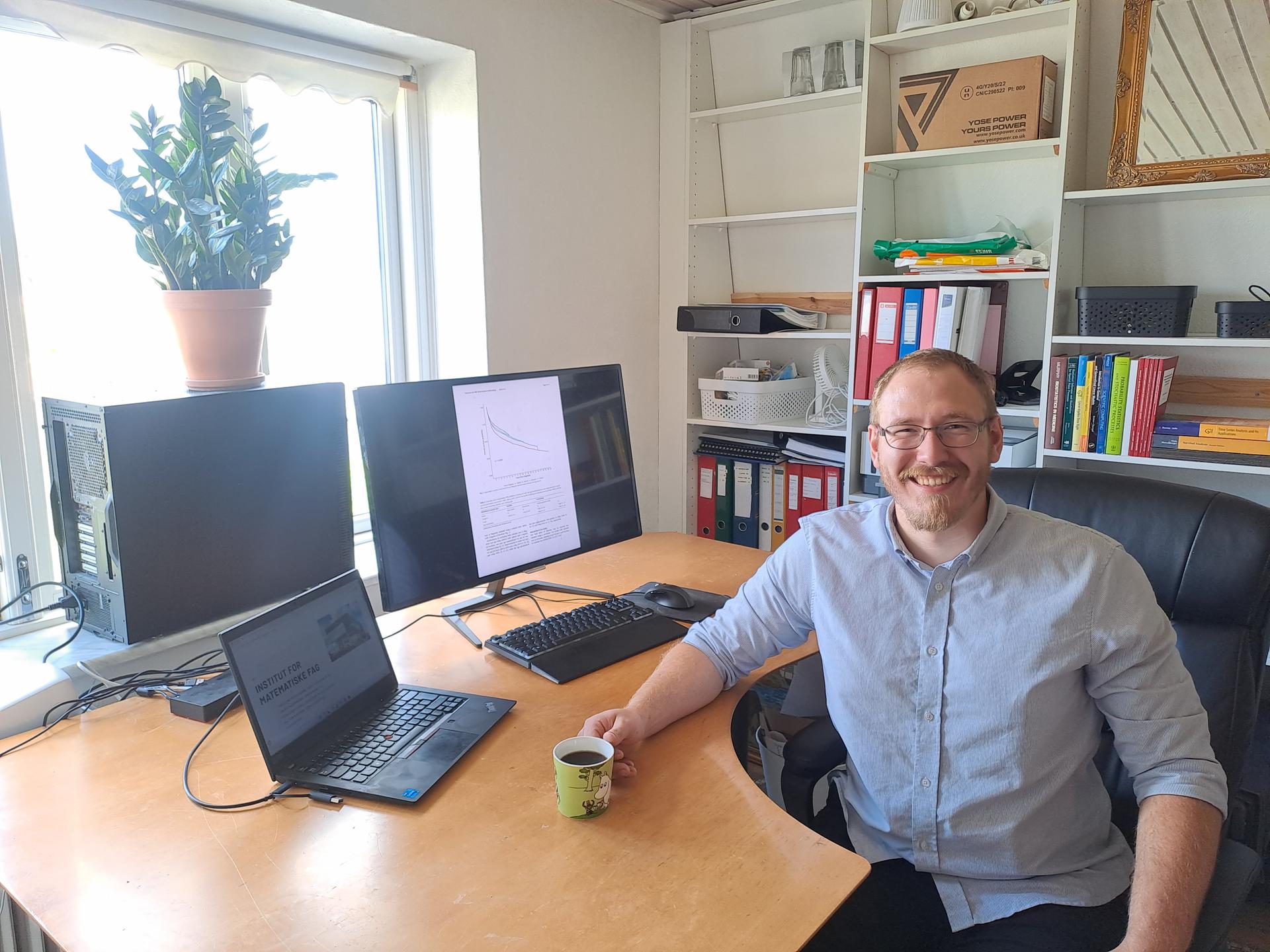
Today, doctors often assess the course of a cancer patient using the same methods as they did thirty years ago, rules of thumb and simple models rooted in an era before modern data analysis. Mikkel Runason, a PhD student at Aalborg University and a self-proclaimed "nerd", wants to help change that.
Statistical models and machine learning are among his tools, and together with a more innovative use of existing health data, doctors can get better tools to predict the course of disease – and thus make more precise and vital decisions.
"With all the digitalization and AI everywhere today, it can be frustrating that the healthcare system continues to predominantly base their decision-making on simple risk assessments that can be done on the back of a piece of paper," says Mikkel Runason.
Can Mathematics be used in cancer treatment?
Prognostic models are used to predict how a disease will develop in a patient. They can, for example, predict survival, risk of relapse or need for intensive treatment.
"But there is also reason for optimism. Researchers like me have done a lot of groundwork in recent years to be able to get modern decision support for the healthcare system, now we have to see how and to what extent it is integrated into clinical practice."
Mikkel's research focuses on blood cancer and lymphoma, where he has developed and tested prognostic models that surpass the classic tools such as the International Prognostic Index (IPI). In collaboration with SDU researcher Jelena Jelicic, data from thousands of patients in the Danish Lymphoma Registry has been analysed and shown how new models – based on e.g. beta-2 microglobulin and albumin – can significantly improve the risk assessment.
"Treatments in the healthcare system have generally improved so much that there is now a requirement for personalised medicine if we are to continue to improve treatments. Therefore, I hope that we in diagnosis and decision support will soon be able to increase our ambitions and move towards stronger use of data," he says.
Today, doctors often base their assessments on models that are easy to remember, but which do not take into account the complexity of modern patient pathways. By combining ongoing clinical data with advanced statistical methods and Machine Learning, Mikkel Runason and his colleagues' models can provide a much more nuanced picture of the patient's risk and needs.
Mikkel Runason describes himself as a bit of a nerd when he started university – with a background in gaming, Dungeons & Dragons and a great love for mathematics. He began his academic career with plans to become an officer in the army, but ended up as a mathematician and statistician specializing in cancer.
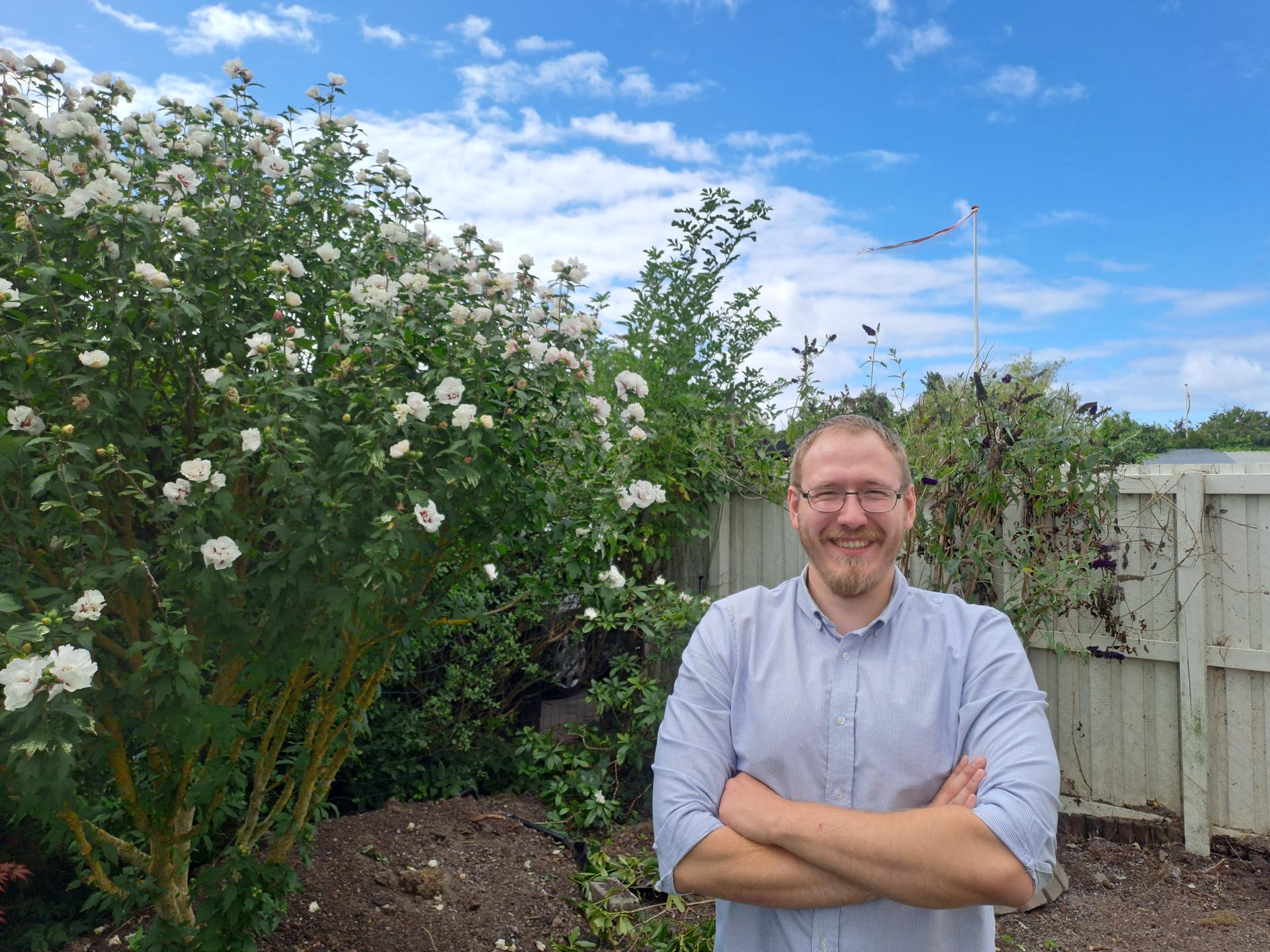
"I had a talented mathematics teacher in high school – an older engineer – and he ignited something in me," he says. "Later I realized that I was too inactive, among other things because of my gaming. I got back pain just from standing up for a long time. That led me to strength training and an interest in health that became more and more professional."
Mikkel's PhD project is funded by the Danish Data Science Academy (DDSA), and is a collaboration between Aalborg University Hospital and the Department of Mathematical Sciences at Aalborg University – an environment with strong traditions in statistics and mathematics.
He is one of several researchers at his department who work with Machine Learning in the health sector, and his work points towards a future where doctors have access to decision support based on large amounts of data and advanced models.
"The next super tools in diagnostics and health will be a little more cumbersome to build, but the simple models we use now are no longer sufficient. Therefore, it is good to see the great development in AI."