News
A data scientist's journey through Odense's old archives
Published online: 09.12.2025
News
A data scientist's journey through Odense's old archives
Published online: 09.12.2025
A data scientist's journey through Odense's old archives
News
Published online: 09.12.2025
News
Published online: 09.12.2025
By Astrid Helene Mortensen, AAU Communication & Public Affairs
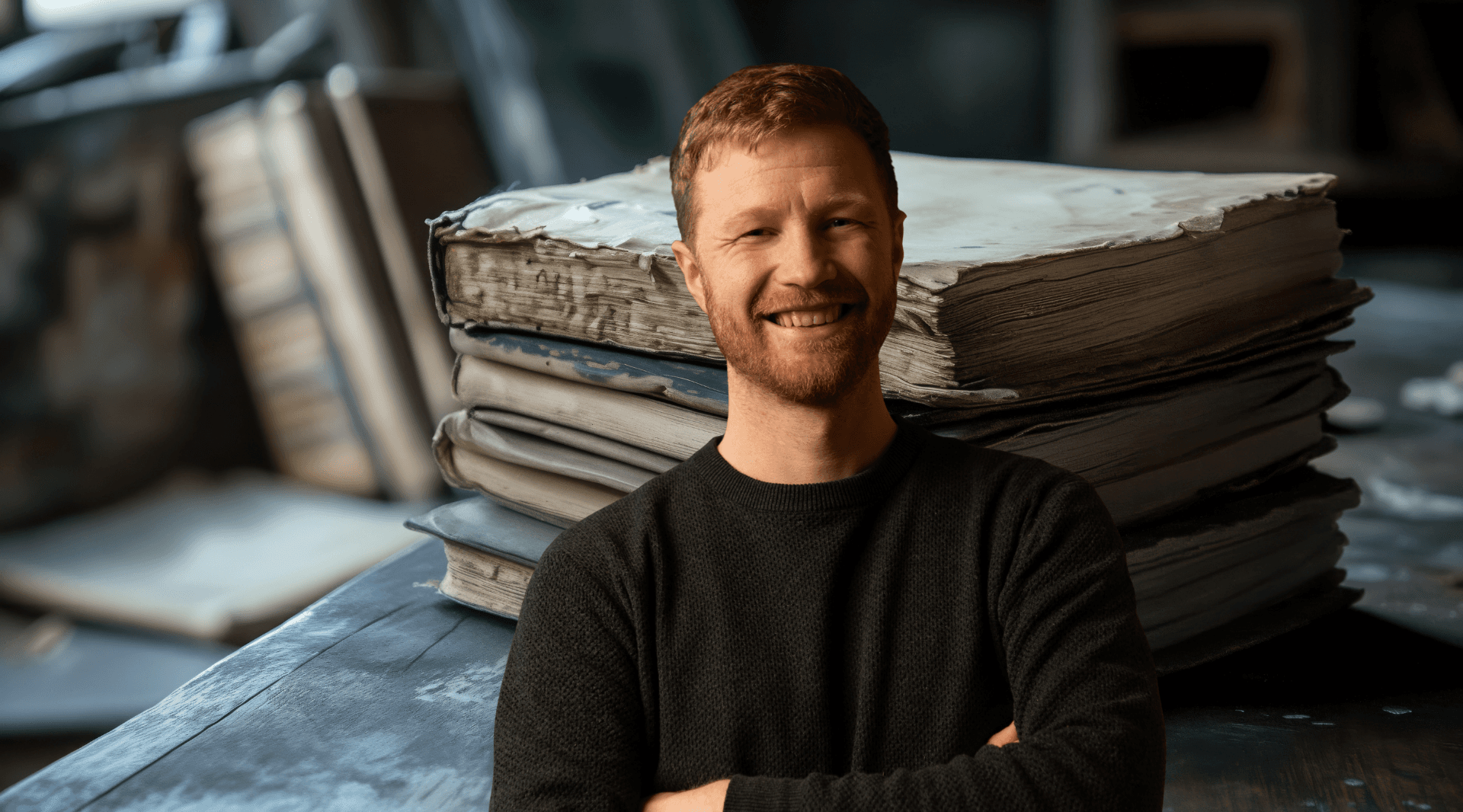
"I never imagined that I would be working with church records," says Tobias Kallehauge with a laugh. Yet that is exactly what he is doing today.
As a data scientist in the Danish National Archives data department, Tobias Kallehauge helps to enrich and develop the state's historical collections.
"We work with sources like censuses and church records where we try to connect people across time," he says.
It sounds simple, but it’s anything but.
"Imagine a census from 1845 where we find a Jens Skovmand in Vodskov. Five years later, a Jens Skovmand reappears, but is it the same person? At that time, there were no social security numbers, and people could change their name or have the wrong age recorded."
To solve the riddle, Tobias Kallehauge and his colleagues in the Link Lives Project are building mathematical models that calculate the probability that two registrations are the same person.
"We use machine learning and training data from historians to teach the model to recognize patterns," he says.
The goal is ambitious: a historical population registry that connects all Danes over the past 200 years over their life courses. This will open up new opportunities for genealogists and researchers who want to analyze mobility and social patterns.
"For example, it was thought that women stayed in the same place, but analyses show that they moved much more than we thought," Tobias Kallehauge explains.
He took his first steps towards the role of data scientist at the Danish National Archives when he chose to study Mathematical Engineering at Aalborg University.
"I felt more like an engineer than a pure mathematician. The programme provides really good tools, everything from mathematics and statistics to programming and signal processing," he says.
The combination of theory and practice was crucial.
"You get not only a solid mathematical foundation but also programming and application. It opens doors to many industries."
He emphasizes that the programme requires a love of mathematics.
"The first semesters are on a par with the mathematics programme – with Greek letters upside down. If you love mathematics and want to combine it with the engineering, it's a fantastic programme," he assesses.
After his Master's degree, Tobias Kallehauge continued with a PhD in wireless communication where he developed statistical models for critical radio connections.
"It was about ensuring stable signals in situations where it’s absolutely crucial, for example, robots in factories or remote operations," he says.
He remembers one experiment at the university in particular:
"We moved an antenna around the area for five hours and measured radio waves at 128 locations. It was actually really fun."
After his PhD, Tobias Kallehauge wanted to try something outside the university.
"I hadn't planned to work with historical data, but when I found the job at the Danish National Archives, I thought: This is for me. It's a data science position with programming and statistics, and at the same time a research project where I can write articles and go to conferences."
For Tobias Kallehauge, the work at the Danish National Archives is not just about the past, it is about creating new opportunities for research and understanding.
"It's fascinating to see how data can tell stories when we connect things," he says.
With the Link Lives Project, he is helping to build a bridge between historical sources and modern technology so we can learn more about how people lived and moved through generations.
Visit https://link-lives.dk to learn more (In Danish).
Translated by LeeAnn Iovanni, AAU Communication and Public Affairs.
Facts about the programme in Mathematical Engineering (BSc)
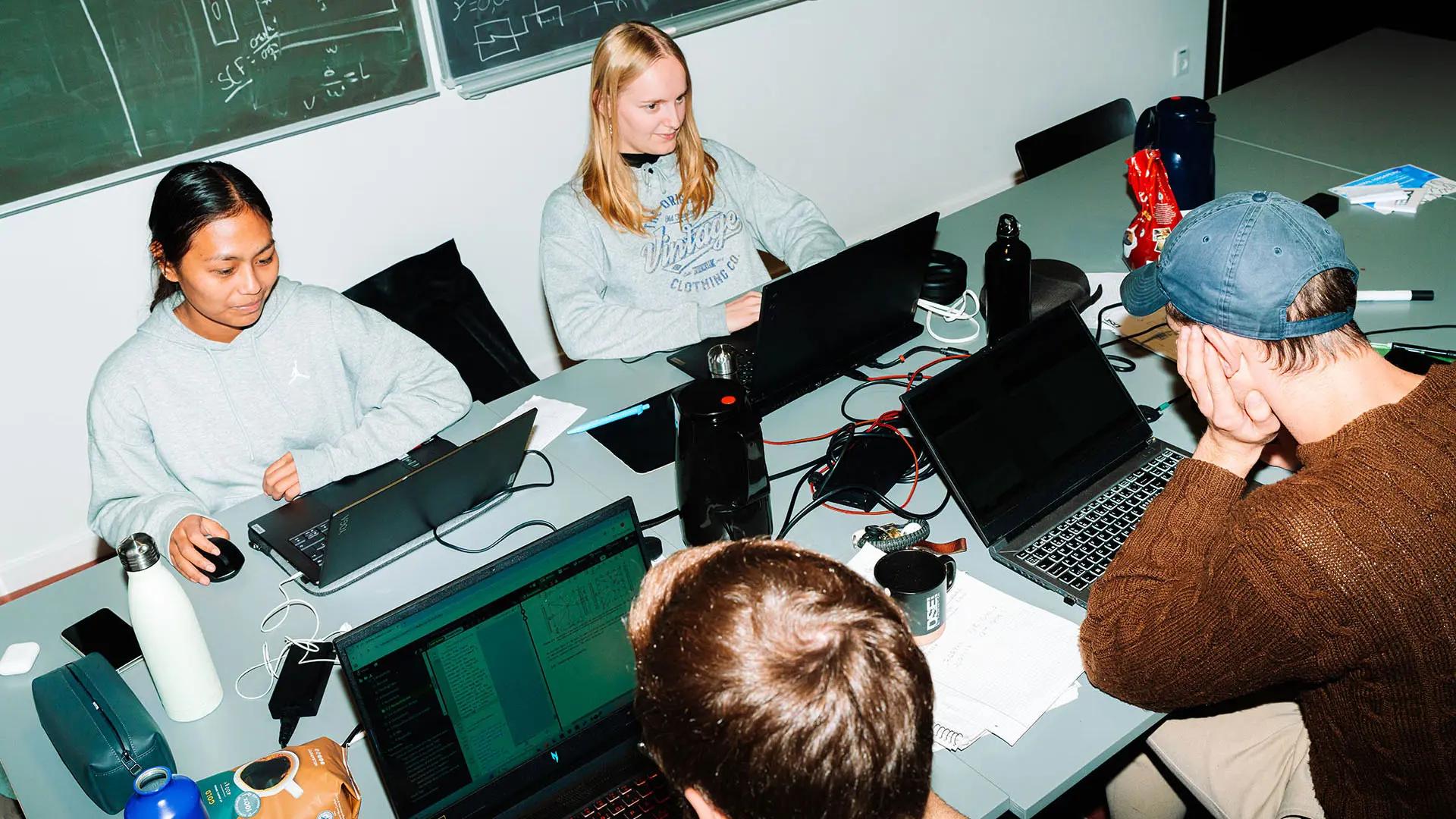
In the Bachelor's degree program in Mathematical Engineering, you learn to solve important tasks for society using mathematical models, calculations, and engineering. The tasks can be anything from reducing noise in hearing aids to improving traffic in a big city.